Practical guide · Bedding
Small-Space Comfort: What to Look for in a Travel Pillow
A travel pillow has a modest job with complicated demands: support your head in unfamiliar places, fit into limited luggage, and stay clean through a journey. The right choice depends less on a promise of perfect sleep than on where you’ll use it, how you like to rest, and what you can realistically carry.
Published October 24, 2026
A pillow at home has a familiar territory: the bed, the pillowcase, the quiet routine of night. A travel pillow goes elsewhere. It may be pressed against an airplane window, tucked behind the neck in a car, packed beside a change of clothes, or used for a night in a guest room. Its small dimensions can make a noticeable difference to the way you settle in, but a compact shape alone does not guarantee useful support.
Choosing well means weighing several things at once: shape, fill, loft, weight, packability, and care. Each involves a trade-off. A very soft pillow may be pleasant to touch but offer little resistance; a supportive one may take up more room. A removable cover can simplify cleaning, yet the pillow insert may still need careful handling. The best travel pillow is not necessarily the smallest or most elaborate. It is the one that suits the journey you actually take.
Start with the journey, not the label
“Travel pillow” can describe several different objects. A compact rectangular pillow may be intended for a hotel, overnight train, or road trip. A curved neck pillow is shaped to sit around the neck while a person is upright. A small, flexible pillow may serve as a lumbar cushion, a support for a child, or a familiar piece of bedding to carry from place to place. These designs do not perform the same task, so the first question is simple: where will you use it most?
For air travel, the main challenge is usually maintaining a comfortable head position while sitting upright. A neck-shaped design may be convenient because it stays close to the body and can help limit sideways movement. But individual anatomy, seat shape, and preferred posture vary. Some travellers find a conventional small pillow more comfortable against a window or between the head and shoulder. Others prefer using the pillow behind the lower back rather than the neck.
On a road trip, a pillow may be used during a rest stop or in a passenger seat, where the available space and position differ from an aircraft. A compact rectangular style can be easier to repurpose: it may support the neck, cushion an arm, or offer extra comfort in an overnight room. Drivers should never use a pillow or any other item in a way that interferes with safe driving, visibility, or seat-belt fit. Passengers, too, should make sure an added cushion does not compromise the proper positioning of a seat belt.
For hotel stays and visits with family, a travel pillow often functions as a small, familiar alternative to whatever bedding is provided. Here, a more traditional shape may matter more than an upright-support contour. Consider whether you want to use it alone, place it on top of another pillow, or bring it as a backup. Thinking through the setting helps narrow the choices before you compare materials.
Shape and support: fit matters more than bulk
A pillow supports the head by filling some of the space between the body and the surface beneath it. How much space needs filling depends on posture, shoulder width, mattress or seat firmness, and personal preference. A travel pillow that feels substantial in the hand can still be too low or too high once it is in use. Where possible, assess its height and firmness in the position you expect to use it.
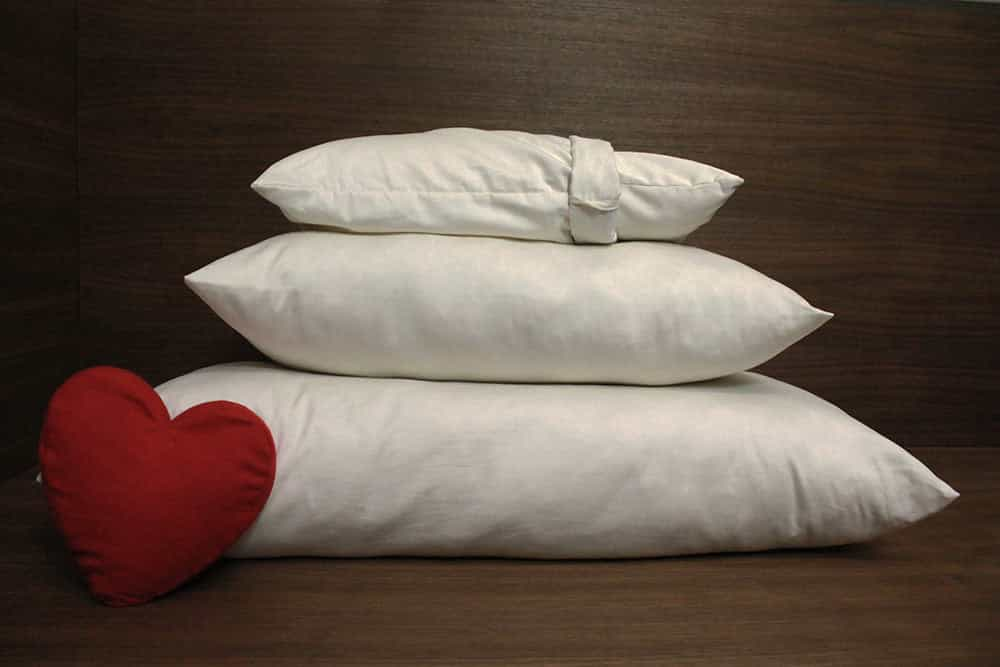
A standard rectangular travel pillow offers familiar proportions and flexible uses. It may work as a small bed pillow, a cushion behind the neck, or a buffer between the body and a hard surface. Its main limitation is that it may shift when used upright, particularly if it has no contoured shape or way to secure it. A curved neck pillow is designed to stay near the neck, but its shape may feel restrictive to people who prefer moving freely or changing position often.
Some travel pillows have adjustable fill. A zippered case or inner compartment allows the user to remove or add material and change the pillow’s loft. This can be useful when one fixed height feels too tall or too flat. Adjustment also brings practical considerations: loose filling can spill, and the pillow may need to be opened in a clean, spacious place. If you plan to adjust it, check that the closure is secure and that the filling is easy to contain.
Support should not be confused with hardness. A pillow can feel soft on contact yet still provide enough resistance to keep its shape; another may feel firm without matching the way you rest. Rather than looking for a universal firmness recommendation, consider whether your head settles comfortably, whether the pillow stays where you place it, and whether its shape suits your typical position. A pillow is an aid to comfort, not a medical device, and it cannot guarantee pain relief or correct a diagnosed condition.
What different fills can feel like
Fill influences a pillow’s weight, spring, compressibility, and care needs. The same material can behave differently depending on how it is processed and how much of it is used. A description such as “wool-filled” or “adjustable” is a starting point, not a complete account of feel. Look for details about construction, whether the fill is loose or layered, and whether the case can be opened.
Wool: resilient and breathable
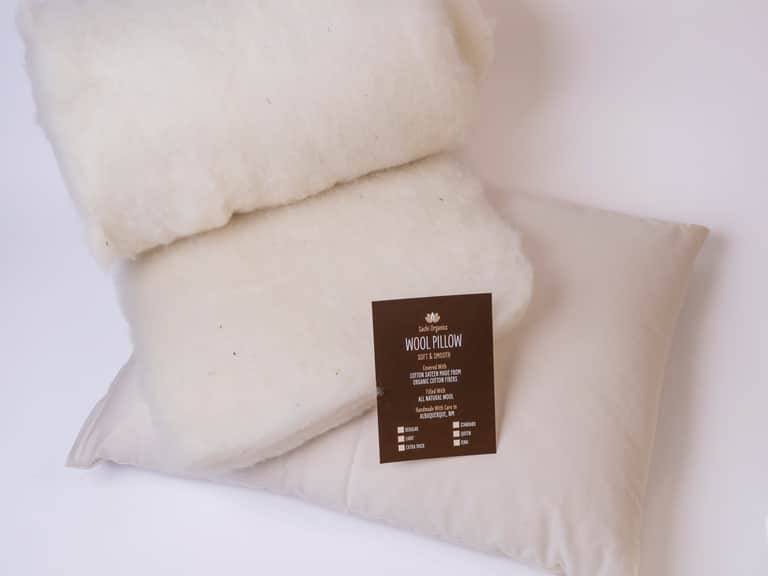
Wool is used in travel pillows as loose clusters, batting, or other forms of filling. It has a springy hand and can compress under pressure before recovering some of its loft. Wool also interacts with moisture in a way that may help a pillow feel less clammy than materials that hold moisture close to the surface. How noticeable that effect is depends on the construction, cover, room conditions, and sleeper.
For a compact wool travel pillow, pay attention to whether the item is intended to be spot-cleaned and whether it comes with a separate washable case. Those details may matter more on a trip than broad claims about the fiber. Natural materials are not automatically washable, stain-proof, or suitable for every person; care instructions and personal sensitivities deserve a place in the decision.
Latex and other resilient fills
Latex filling is often described as resilient and responsive, though its feel depends on whether it is in a solid core or shredded form. Shredded fill can sometimes be shifted or adjusted, while a solid core tends to preserve a more defined shape. A latex travel pillow may be a reasonable choice for someone who values a buoyant feel, but its weight and packability should be checked against the intended journey.
Synthetic and down-like fills
Synthetic fibers can be lightweight and compressible, making them convenient for luggage. Down and feather fills may feel soft and moldable, but their care, sourcing, and allergy considerations differ from those of wool or synthetic materials. None of these categories is a guarantee of comfort: fill quantity, chamber design, cover fabric, and the pillow’s dimensions all shape the experience.
When comparing fills, avoid relying on a single adjective such as “cooling,” “supportive,” or “hypoallergenic.” Such terms can describe intended qualities, but they do not establish how a pillow will feel for every user. Read the material breakdown, examine the construction, and consider any known allergies or sensitivities. If a product’s description does not make the fill and care instructions clear, that uncertainty is worth taking seriously.
Packability is a practical calculation
A pillow’s packed size is not the only measure of convenience. Weight, shape, compressibility, and ease of access also affect how it travels. A pillow that compresses into a small pouch may be easy to stow, but it can take time to regain its shape. A pillow that keeps its loft may provide a familiar feel straight from the bag, but occupy more space in a carry-on.
Consider the entire trip rather than only the first moment of packing. Will the pillow need to fit in a small personal bag? Will you carry it between several places? Can it be attached securely to luggage without swinging or dragging? Is there space to store it once you arrive? A compact design can be especially useful for commuters and overnight travellers, while someone driving directly to a cabin may have more room to bring a larger cushion.
A separate case can make a small pillow easier to protect and carry. If the case has a zipper or a close-fitting envelope design, check that it stays closed during transit. For a pillow that does not compress, measure the packed dimensions rather than guessing from its name. In a crowded bag, a few inches can determine whether it fits neatly or competes with clothing and other essentials.
Care begins before the first trip
Travel introduces pillows to surfaces they do not encounter at home: luggage, seats, shared rooms, and changing temperatures. A removable, washable case is therefore a useful feature. It creates a layer that can be cleaned more regularly than the insert itself. Check whether the case is machine washable, what water temperature is recommended, and whether it should be line-dried or tumble-dried on low heat.
The insert may have different instructions. Some pillows are spot-clean only; others permit washing under specific conditions. Do not assume that a removable cover means the filling can be washed. Water, agitation, high heat, or incomplete drying may damage some fills or cause them to bunch, shrink, or lose loft. Always follow the manufacturer’s directions for the exact pillow rather than applying a general rule for the material.
A pillow protector can add another barrier against everyday soil and perspiration. For a travel pillow, it can also reduce the amount of direct contact between the insert and shared surroundings. Airing the pillow after use may help it feel fresher, provided the care instructions allow it. Avoid prolonged direct heat or sunlight unless the manufacturer specifically recommends it; natural fibers and covers can respond differently to exposure.
Before leaving home, make a quick care plan. If the pillow is spot-clean only, consider whether you can keep it inside a clean bag when not in use. If the case is washable, bring a spare or plan when it can be laundered. These modest preparations can prevent a small comfort item from becoming an awkward item to maintain on the road.
Materials, certifications, and what they tell you
Travellers who prefer natural materials may look for wool filling and cotton covers, while others prioritize easy washing or low weight. Whatever the preference, clarity about composition is valuable. A useful description identifies the fill, outer fabric, any inner liner, and whether the parts can be separated. It should also explain where relevant materials come from and how the pillow is cared for.
Certifications can help verify particular claims, but they apply to defined scopes and standards. For example, a certification associated with organic textiles may address specific stages or requirements in a supply chain; it should not be treated as proof of every environmental or performance claim a product might make. Read what the label actually covers, and distinguish certification of a material from certification of a finished item.
Sustainability is also more than a fiber choice. Durability, repairability, the number of components, packaging, transport, and the likelihood that a pillow will be used for years all contribute to its broader footprint. A well-made pillow that meets a real need and is cared for properly may be more useful than a highly specified product that does not suit its owner. Simple, transparent product information helps make that judgment possible.
A quick comparison checklist
Before choosing among travel pillows, compare the details that affect daily use:
- Use: Is the pillow for upright travel, a bed away from home, lumbar support, or more than one purpose?
- Shape: Does its form suit your preferred sleeping or resting position?
- Loft and firmness: Can you assess the height and resistance, or adjust the fill if needed?
- Fill: Is the material clearly identified, and does its likely feel suit your preferences?
- Dimensions and weight: Will it fit your bag and remain comfortable to carry?
- Case: Is there a removable cover, and can it be washed separately?
- Insert care: Is the pillow spot-clean only, washable, or subject to other specific instructions?
- Allergies and sensitivities: Are the materials appropriate for your needs, and is the construction described clearly?
- Durability: Are the seams, closure, and cover designed for repeated packing and use?
Match the pillow to the person using it
A travel pillow is personal equipment. Two people on the same flight may want very different things: one may need a firm, stable surface, while the other prefers a soft pillow that can be folded or repositioned. A person who changes positions frequently may value flexibility more than a fixed contour. Someone who takes short journeys may care most about low weight; someone on regular overnight trips may prefer durability and a washable case.
Children and smaller adults may find standard travel pillows too bulky, while a compact pillow might not provide enough support for a larger frame. Dimensions and intended use are more informative than a label such as “one size fits all.” For younger passengers, follow guidance from the relevant transport provider and avoid placing accessories in ways that interfere with restraints or safety instructions.
For people with ongoing neck pain, breathing concerns, or other health conditions, a travel pillow should not be treated as a substitute for professional advice. Comfort preferences can be tested, but claims that a pillow treats a condition require appropriate evidence. If a specific medical need affects travel, a clinician familiar with that need can offer more relevant guidance than a general product description.
The most useful choice is the one you will carry
The promise of a travel pillow is small and practical: a little more support in a place that was not designed for sleep. To find one that delivers, begin with the journey and the position in which you hope to use it. Then weigh shape, fill, packed size, and the difference between washing a cover and cleaning an insert. A pillow that is easy to care for and comfortable enough to bring along may serve better than a more elaborate design left behind at home.
For wool-filled styles, look beyond the natural-material appeal to the specific construction. Wool may provide a resilient, breathable fill, but the pillow’s loft, weight, cover, and care instructions determine whether it fits your routine. If adjustability matters, confirm how the opening works and whether loose fill is manageable. If easy cleaning matters most, prioritize a removable case and clear, realistic washing guidance.
Travel unfolds in constrained spaces: a narrow seat, a small bag, an unfamiliar room. A thoughtfully chosen pillow cannot transform those surroundings, but it can make them easier to inhabit. The best fit is the one that balances useful support with the simple logistics of being away—compact enough to bring, comfortable enough to use, and straightforward enough to care for after the journey ends.
Key takeaways
- Choose a travel pillow for its intended setting: upright travel, a bed away from home, or flexible everyday support.
- Compare shape, loft, and fill rather than relying on broad claims about comfort.
- Balance compressed size with weight, recovery time, and the space available in your luggage.
- Check care instructions for both the insert and any separate cover; they may differ.
- For wool pillows, confirm the construction and cleaning requirements as well as the fiber content.